How to start a cut flower garden: a complete 2026 guide from someone who actually grows them
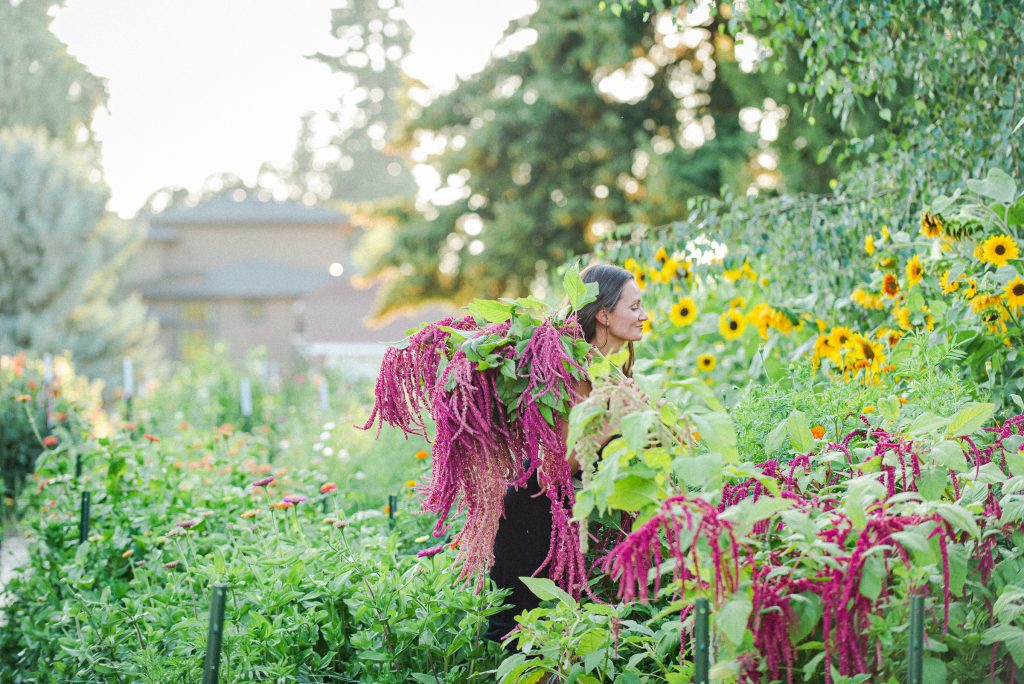
In autumn 2019 I planted forty-eight dahlia tubers in a small allotment outside Cheltenham because I’d just been made redundant from a corporate communications role and I needed something to do with my hands. By the following August I was selling thirty-five bouquets a week at Stroud farmers market, the dahlias were the size of dinner plates, and I’d quietly decided not to go back to office work. Six years later I run a small cut flower garden — 42 square metres, give or take — that produces around 4,000 stems a year. It pays my council tax and gives away more flowers than it sells. It is not the polished operation of Floret Farm or Erin Benzakein’s setup in the Skagit Valley. It is a working English plot with weeds, the occasional disaster, and a learning curve I’m still climbing. This guide is what I’d say to anyone asking me how to start their own. Including the eighteen flowers I’d plant again every year, the four I quietly abandoned, the cutting rules that genuinely double vase life, and the realistic numbers nobody mentions in the Instagram posts.
- Start small and grow only what cuts well. A 4 m×2 m plot can produce more bouquets than you expect.
- Cosmos and zinnias are the workhorses. If you only grow two annuals, grow these.
- Vase life depends more on when you cut than what you grow. Most flowers double their lifespan if cut at dawn.
- Sow indoors in March, transplant in May. Direct sowing in UK soil rarely beats started seedlings.
- Dahlias are worth the faff. They earn their bed space twice over.
- Half the flowers Instagram celebrates aren’t economic. Beautiful does not equal productive.
- What a cut flower garden actually is
- Why I started growing flowers
- Planning your cut flower garden
- The 18 flowers I’d plant every year
- Flowers I tried and quietly abandoned
- When to sow what: the seasonal calendar
- The 4 cutting rules that double vase life
- Common mistakes new cut flower growers make
- Bouquet design principles I use weekly
- My honest verdict after 6 years
- Conclusion: the bigger picture
- Frequently asked questions
What a cut flower garden actually is (and how it differs from an ornamental border)
A cut flower garden is grown to be harvested. That is the entire distinction. You plant flowers in rows or close blocks, not in carefully composed borders. You sacrifice display in the garden for armfuls in the kitchen. By August your plot will look slightly battered — gappy where you’ve cut, lopsided where the dahlias are leaning — and that is the correct state of a working cutting garden. If it looks pristine, you’re not cutting enough.
This matters because most British gardening writing comes from an ornamental tradition. The RHS, Gardeners’ World, every Sissinghurst-inspired Pinterest board — they’re talking about borders, which are designed for visual impact in situ. A cutting garden has different rules:
- Rows over composition. Planted like vegetables, in straight lines spaced for access and weeding.
- Productivity over rarity. Cosmos and zinnias beat the trendy single rose every time on stem count.
- Stem length matters. A flower with 30 cm stems is useless in a vase. Pick varieties bred or selected for long stems.
- Succession over peak. A border peaks for six glorious weeks; a cutting garden produces for six months if planned correctly.
- Harvest hardiness. Some flowers — peonies, foxgloves at the wrong stage — collapse within a day in a vase. They’re skipped in commercial cutting gardens for a reason.
If you’ve got an existing ornamental border and want to add cutting potential, set aside a separate small bed — even 2 m by 4 m is plenty for a household — rather than trying to harvest from the display garden. You’ll resent cutting the showpiece dahlia by August. Give the cutting flowers their own working space.
Why I started growing flowers — and what changed
The honest answer is grief, partly, and boredom. My mother died in spring 2019, the redundancy followed that autumn, and I needed something tangible that wasn’t a screen. A neighbour on my allotment site — a man called Bernard who’s been growing dahlias since 1984 — offered me four spare tubers in late October. I planted them, mostly because saying no felt rude, and went home expecting nothing in particular.
The following August those four tubers produced over two hundred blooms. I was unprepared for how much that mattered. I sold the surplus at Stroud farmers market for £6 a bouquet, sold out within ninety minutes, and stood there with a cash box and a quiet feeling I hadn’t had in office work for years.
By 2020 I’d doubled the plot. By 2022 I’d converted the back garden of the cottage I’d just bought outside Painswick. By 2024 I was supplying three local pubs and the village deli with weekly bouquets in exchange for free coffee and a small retainer. It doesn’t replace a corporate salary. It also doesn’t try to. What it does is fund itself, occupy the parts of me that wanted occupying, and produce something my neighbours actually want.
I mention all this because I think the framing matters. A cut flower garden isn’t a business plan — though it can support a small one — and it isn’t strictly a hobby either. It sits in the gap between the two. Going in with that expectation, rather than expecting a polished cottage-industry to emerge overnight, makes the whole thing more sustainable.
Planning your cut flower garden: space, sun, soil
Before you order a single seed packet, three decisions matter more than everything else combined.
Pick a sunny spot — 6+ hours minimum
Cut flowers want full sun. South or southwest exposure is ideal. Most of the productive workhorses — cosmos, zinnias, dahlias, sunflowers — produce dramatically fewer stems in shade. If your only available spot gets less than six hours of summer sun, expect to grow primarily shade-tolerant fillers like Ammi or Bishop’s lace, and accept lower yields.
Plan for access, not visual symmetry
Cut flowers are grown like vegetables — in rows with access paths between them. I work on a 4 ft (1.2 m) wide bed with 18-inch (45 cm) paths on each side. Anything wider than 1.2 m and you can’t reach the centre to cut. Anything narrower than 1.2 m and you waste space. This isn’t a border; it’s a workspace.
Soil quality matters more than soil type
I’m on Cotswold limestone over heavy clay — neither ideal — and the cutting garden produces because I’ve added roughly 50 mm of compost annually for six years. Soil isn’t what you start with; it’s what you build. If you’re starting on poor soil, plan for a full year of soil-building before expecting good yields. The no-dig approach we covered here works beautifully for cut flower beds.
The 18 cut flowers I’d plant every year
What follows is the working list. Six years of trial and error condensed into the eighteen I’d genuinely plant again every single season. I’ve grouped them by category — annuals from seed, spring bulbs and corms, biennials, tubers — because the sowing and timing differ enormously.
The summer annual workhorses (cut and come again)
Cosmos — the workhorse
If I could grow only one cut flower, it would be cosmos. Tall, productive, easy from seed, blooms continuously from July until first frost. The ‘Cupcakes’ series is sublime; ‘Double Click’ adds ruffled depth; the simple ‘Purity’ white is wedding-ready. A single plant produces 50-80 stems per season, which is absurd value. Sow indoors in late March, transplant after frost in May.
Watch for: too much nitrogen-rich soil produces leafy plants with fewer flowers. Don’t over-feed.
Zinnia — the colour palette
The other essential annual. Heat-loving, prolific, and they last in a vase longer than almost anything else on this list. The ‘Benary’s Giant’ series and ‘Queen Lime’ varieties (lime green, peach, blush) are extraordinary. Direct sowing works in southern England, though I get better yields starting indoors. Cut deep — to a leaf node — to encourage longer next stems.
Watch for: powdery mildew in late August. Improves with airflow and morning watering only.
Sunflower (branching varieties) — for drama
Avoid the single-stem giant varieties — they’re one bloom and done. Grow branching types like ‘Soraya’, ‘Italian White’, ‘ProCut Plum’, or ‘Strawberry Blonde’ which produce 5-8 usable stems per plant over weeks. Succession-sow every three weeks from late April through early July for a continuous August-October supply. They are also the easiest flower I grow to please first-time customers.
Watch for: pinching the central bud at 30 cm height encourages branching. Yes, you sacrifice the first flower for many later ones.
Ammi majus — the universal filler
The flower that turns a fistful of cosmos and zinnias into an actual bouquet. Lacy white umbels, romantic, slightly wild looking. It softens every arrangement. Cool-season hardy annual — sow in autumn for earliest blooms, or in February under cover. Self-seeds aggressively if you let it; mine has colonised an entire path edge willingly.
Watch for: bolting in mid-summer heat. Plant in afternoon shade if possible to extend the cutting window.
Lisianthus — the rose replacement
If you want a rose-like form with twice the vase life and none of the thorn-induced bleeding, lisianthus is the answer. The ‘Echo’ and ‘Voyage’ series produce ruffled, multi-petalled blooms that fool people into thinking they’re peonies or roses. The longest vase life of anything on this list. The catch: notoriously slow from seed — sow in January for July flowers. Most growers buy plug plants from Sarah Raven or Higgledy.
Watch for: damping off in seedling stage. Use sterile compost and bottom-water only.
The fragrant climbers and stocks
Sweet pea — the only acceptable form of nostalgia
The smell is the point. Sweet peas have a vase life of barely a week and stems that are arguably too short for arrangements, but the fragrance fills a kitchen in a way nothing else does. The ‘Spencer’ varieties have the longest stems; ‘Cupani’ and ‘Matucana’ have the strongest scent. Sow in autumn under cover for May flowers, or January for June.
Watch for: stopping picking is the death of the plant. Cut every other day. The moment they set seed, they stop flowering.
Stock — underrated fragrance
The forgotten fragrant flower. Smells of cloves and warm afternoons. The ‘Iron’ series produces gorgeous spires of dense, ruffled blooms. Sow in autumn or February for spring/early summer blooms — they bolt in heat. Pair with sweet peas for the most fragrant bouquets you’ll ever make.
Watch for: select for “double” flowering plants at seedling stage — the yellow-leaved seedlings produce doubles, the green-leaved produce less impressive singles.
The early summer stars (cool weather hardy annuals)
Snapdragon — the spire workhorse
Tall snapdragons (the ‘Rocket’, ‘Madame Butterfly’, and ‘Chantilly’ series — not the dwarf bedding ones) produce architectural spires that anchor early summer bouquets. The ‘Madame Butterfly’ open-faced doubles are exceptional. Cool-season — they want sowing in autumn or February for May-July picking.
Watch for: pinching at four true leaves doubles branching and total stem count.
Larkspur — the cottage staple
Tall blue, pink, and white spires that look like the Sissinghurst dream. Direct sow in autumn for best results — they hate transplanting. The ‘Sublime’ series produces densely-flowered stems perfect for cutting. Briefly stunning, then they’re done — a 4-6 week window only. Plan accordingly.
Watch for: don’t sow too late in spring; they’ll bolt without flowering well.
Bells of Ireland — the architectural lime
Not a true bell, not from Ireland, but striking nonetheless. Tall stems lined with apple-green papery “bells” that hold their colour beautifully in arrangements and dry well too. Tricky from seed — cold-stratify in the fridge for 1-2 weeks before sowing. Worth the faff for the structural value alone.
Watch for: stems have sneaky thorns. Wear gloves when cutting.
The spring bulbs and corms (autumn planted, spring harvested)
Tulip — spring’s heaviest hitter
For cutting, treat tulips as annuals: plant in late autumn, cut entire stem and bulb at harvest (pull rather than cut for maximum length), then replace with annuals in the same bed. The ‘Brownie’, ‘La Belle Epoque’, ‘Belle Epoque’ parrot and ‘Foxtrot’ double varieties are stunning. Plant tulips at twice the depth of the bulb minimum — 15-20 cm deep — for sturdier stems.
Watch for: squirrels and voles love tulip bulbs. A cover of chicken wire over the bed deters them.
Ranunculus — the rosebud perfection
Worth the effort. The corms look like dried octopuses, plant claws-down in late October after a 4-hour soak. They want cool weather and well-drained soil — they rot in waterlogged ground. The ‘La Belle’ and ‘Amandine’ series produce extraordinary multi-petalled blooms. Vase life is among the longest of any spring flower.
Watch for: protect with frost fleece in hard winters. They handle light frost but not -8°C.
Anemone — jewel colours
The earliest of the cut flower season — March blooms when nothing else is in flower yet. Plant corms in autumn at the same time as ranunculus. The ‘Mistral’ and ‘Galilee’ series produce vivid purple, white, and red blooms with that signature dark eye. Pricey corms but each one produces 6-10 flowers per season.
Watch for: shorter vase life than ranunculus — cut just as flowers begin to open.
The biennials (planted year one, flowering year two)
Foxglove — the cottage spire
Biennial — sow in summer for flowers the following June. The ‘Excelsior’ and ‘Camelot’ series are the best for cutting. All parts are toxic if ingested, which makes them a poor choice if you have small children or pets that might chew flowers. The visual reward is unmatched, though.
Watch for: rotate planting position annually to avoid disease build-up.
Sweet William — the underrated classic
Old-fashioned, slightly out of fashion, and absolutely worth growing for the extraordinary vase life. Two weeks in water, easily. Sow in summer for flowers the next June. The ‘Sooty’ (almost-black) and ‘Festival’ series are particularly fine. A reliable filler that bridges the gap between spring bulbs and summer annuals.
Watch for: they spread — let some flowers go to seed and they’ll re-populate the bed.
The tubers (the showstoppers)
Dahlia — the late summer queen
The single category that converted me from corporate communications to flower growing. Plant tubers after last frost (mid-May in the Cotswolds). The dinnerplate types (‘Cafe au Lait’, ‘Labyrinth’, ‘Penhill Watermelon’) are show-stoppers; the ball types (‘Cornel Bronze’, ‘Boom Boom White’) hold their form longest in vases. Pinch the central growing tip when plant is 30 cm tall — sacrificing one early flower gives you four to six branched stems.
Watch for: earwigs love dahlias. Set traps (upturned flowerpots stuffed with straw) at the base of each plant.
The supporting cast (fillers and finishers)
Calendula — cheerful and unfussy
The friendly orange and apricot daisy-like blooms that smell distinctly herby. Direct sow in spring, blooms for months, self-seeds for next year. The ‘Pink Surprise’ and ‘Bronzed Beauty’ cultivars are surprisingly sophisticated. Pollinators adore them. Petals are edible — useful for cake decoration and salads.
Watch for: deadhead aggressively. If left to seed, flowering stops within weeks.
Strawflower — the eternal bloom
Crisp papery blooms that feel slightly artificial when you first touch them. The single best flower for drying — hang upside down in a dry, dark place for two weeks and the colour holds for years. The ‘King Size’ and ‘Apricot/Peach Mix’ varieties are exceptional. Fresh in vases they last two weeks; dried, indefinitely.
Watch for: cut just before flowers fully open for the brightest dried colour.
Flowers I tried and quietly abandoned
Six years of experimentation produces failures alongside the successes. These are the ones I no longer grow, and why.
Peony
Three years from planting to first flowers. A flowering season of perhaps eight days. Beautiful, certainly, but economically nonsensical for a small cutting garden — every metre of bed needs to earn its space, and peonies don’t.
Black-eyed Susan vine (Thunbergia)
Stems too short. Vase life too brief. Sold by every seed catalogue as a cut flower; never actually one I’d recommend. The ‘Lemon A-Peel’ and ‘Tangerine’ varieties are pretty in the garden as climbers — leave them there.
Iceland poppy
Stunning in catalogues. Stems that bend immediately, blooms that drop petals within 36 hours. A heart-breaker. The seeds are pricey too. Skip.
Eucalyptus (as filler)
Everyone wants eucalyptus foliage in arrangements. I grew silver dollar eucalyptus for two seasons and quietly gave up — in UK conditions it grew too slowly to be useful as a cutting crop. If you want eucalyptus filler, buy it. Don’t grow it unless you’re in a warmer USDA zone.
When to sow what: the seasonal calendar
Most cut flower failures are timing failures. Sweet peas sown in May will give you nothing useful. Tulips planted in February won’t flower at all. Get the timing right and most of the rest takes care of itself.
| Month | Sow indoors | Sow outdoors | Plant out / harvest |
|---|---|---|---|
| January | Lisianthus, snapdragon | — | — |
| February | Stock, snapdragon, sweet pea | — | Plant ranunculus / anemone corms (autumn-skipped) |
| March | Cosmos, zinnia, ammi, calendula | Larkspur, calendula | — |
| April | Sunflower (first batch), bells of Ireland | Calendula, sunflower | Harden off cool-season transplants |
| May | Sunflower (succession) | Cosmos, zinnia (after frost) | Plant out cosmos, zinnia, dahlias after last frost |
| June | — | Direct sow sunflower (last batch) | First sweet pea harvest. First snapdragon, ammi, larkspur |
| July | Sweet William, foxglove (for next year) | — | Peak: cosmos, zinnia, lisianthus, sunflowers |
| August | Foxglove (continue) | — | Peak everything. Dahlia begins. |
| September | — | Hardy annual seeds (ammi, larkspur for spring) | Dahlia peak. Last cosmos and zinnia harvests. |
| October | — | Sweet pea (UK only) | Plant spring bulbs (tulip, narcissus). Lift dahlia tubers after frost. |
| November | — | — | Plant ranunculus/anemone corms. Soil prep. |
The 4 cutting rules that double vase life
This is the section that took me three years to figure out, and the section that — when I finally got it right — changed everything about what I could sell. The flowers don’t actually need to be any fancier; they need to be cut correctly.
Cut at dawn or dusk — never at midday
Plant cells are fully hydrated at dawn and after the day cools. Cutting at midday in full sun stresses the plant and dramatically shortens vase life — sometimes by half. I cut at 6am from May through August. If you absolutely must cut later, do it after 7pm when temperatures drop.
Cut into clean cold water immediately
Carry a bucket with you. Stems exposed to air for more than 30 seconds form a callus that stops water uptake. The bucket should contain cold water — not warm — and ideally with a drop of bleach to discourage bacteria. Stems get re-cut underwater at the conditioning stage indoors.
Cut at the right stage for each flower
Different flowers want cutting at different stages. Roses, dahlias, lisianthus: cut when buds are just starting to show colour. Zinnias, sunflowers, cosmos: cut when fully open — they don’t continue opening in the vase. Tulips, peonies: cut at the “marshmallow stage” when buds feel soft but unopened. Getting this wrong is the most common reason for short vase life.
Condition for 4 hours before arranging
Bring cut stems indoors to a cool dark room — a garage works perfectly. Strip leaves below water line. Let stems hydrate fully for 4 hours minimum, ideally overnight. This single step adds 2-4 days to vase life compared to arranging immediately. Use commercial flower food (Chrysal, Floralife) or a homemade solution: 1 tsp sugar, 2 drops bleach, 2 tsp lemon juice per litre.
Hard tap water shortens vase life noticeably. Filtered, distilled, or rainwater extends most flowers by 2-3 days. For high-value arrangements, it matters. For a daily kitchen-table bouquet, tap water is fine.
Common mistakes new cut flower growers make
Six years of mistakes, condensed for your benefit.
- Growing too many varieties at first. A first-year cutting garden should grow five varieties well, not eighteen badly. Start with cosmos, zinnias, sunflowers, calendula, and sweet peas. Add complexity in year two.
- Direct-sowing everything in UK soil. Cold British springs delay direct-sown annuals by 4-6 weeks compared to indoor-started seedlings. Start indoors unless the seed packet specifically says direct-sow only.
- Not pinching out central growing tips. Most branching annuals (cosmos, zinnias, snapdragons, sunflowers, dahlias) produce far more stems if pinched at 20-30 cm height. Skip this and you halve your harvest.
- Cutting too short. Cut deep — to a leaf node — even on the first harvest. This signals the plant to branch from below the cut, producing two new stems for the price of one.
- Ignoring spacing. Cut flowers want airflow. Packing them tighter than recommended causes mildew, mould, and shorter vase life. The seed packet spacing is the minimum, not the suggestion.
- Buying cheap supermarket bulbs and seeds. Cut flower-specific cultivars are bred for long stems, vase life, and harvestability. Garden centre “mixed seeds” rarely include these traits. Buy from Sarah Raven, Higgledy Garden, Chiltern Seeds, or Owl’s Acre. The difference is enormous.
- Underestimating how many seeds to sow. Even reliable seeds have 70-85% germination. For 20 final cosmos plants, sow 28-30 seeds. The Floret Farm rule of thumb: sow 25% more than you want.
- Forgetting succession sowing. Sowing once in April gives you one peak. Sowing every 3 weeks from March to July gives you continuous picking from June to October. The single biggest yield-extender available.
Bouquet design principles I use every week
I make 30-40 bouquets a week between June and October, for the farmers market and local pubs. I’m not a trained florist — I’m a grower with strong opinions — but here’s the working method that emerged from doing it weekly for five years.
The 60-30-10 ratio: Sixty percent should be focal flowers (dahlias, cosmos, zinnias, sunflowers). Thirty percent should be secondary flowers (snapdragons, lisianthus, stock). Ten percent should be filler and texture (ammi, foliage, strawflower, herbs from the garden). Most amateur bouquets fail because they’re 100% focal flowers with no breathing room.
Build a spiral: Hold the first stem upright. Lay each subsequent stem at an angle across the previous, rotating the whole bunch in your hand as you add. After ten stems you have a self-supporting spiral. This is the standard florist’s technique — once you do it for an hour you’ll find it intuitive.
Three rules I never break:
- No two flowers of the same colour touching each other.
- Vary heights deliberately — a flat-topped bouquet looks dead. Vary by 5-10 cm.
- Always include something fragrant. Sweet pea, stock, calendula leaves, scented geranium. The smell is the soul.
Beauty in a vase has very little to do with rarity and almost everything to do with composition. A bouquet of cosmos done well will outperform a bouquet of imported roses done badly. Every time. Erin Benzakein, Floret Farm’s A Year in Flowers
My honest verdict after 6 years
Six years on, here’s where I’ve landed. Cut flower growing is more rewarding than I’d dared hope and more demanding than the Instagram aesthetic suggests. The peaks are extraordinary — a June morning with a fistful of sweet peas in my hand, the August dahlias just opening, autumn calendula glowing in low light — and the troughs are genuinely difficult. Slug invasions in June 2021 wiped out half a season’s work. A late frost in May 2023 took my first dahlia leaves. Powdery mildew arrives every August like clockwork, and there’s nothing to do except work around it.
The economic picture is honest, too. My cutting garden produces around 4,000 stems a year. At an average of 8-10 stems per bouquet, that’s roughly 400-500 bouquets, which I sell, give away, or arrange for my own kitchen. Realistic gross from selling bouquets: around £1,200-1,800 a year. Take off seed costs (~£200), tuber replacement (~£150), tools and supplies (~£100), and you’re at maybe £900-1,300 net for a season. That funds my council tax and a holiday. It does not replace a full salary, and anyone selling you the dream that small flower farming will is not being honest.
A cut flower garden is one of the most rewarding kinds of growing you can do — if you start small, focus on workhorses, and ignore the Instagram pressure to grow only the photogenic rarities. Cosmos and zinnias will give you a hundred bouquets a season. Peonies will give you eight days. Choose accordingly.
What genuinely works
- Cosmos + zinnias as the foundation
- Succession sowing every 3 weeks
- Cutting at dawn, conditioning before arranging
- Pinching central tips to multiply stems
- Starting seeds indoors in cold UK springs
- One dedicated cutting bed, not borrowing from borders
What I’d push back on
- The Instagram emphasis on rare cultivars
- “Quit your job and start a flower farm” content
- Peonies for small plots (poor stems-per-bed ratio)
- The idea that cutting gardens look pretty all season
- Buying cheap supermarket seed mixes
- Skipping the conditioning step
Who should start a cut flower garden
Anyone who likes flowers and has at least 4 m² of sunny soil. Beginners should start with five workhorses (cosmos, zinnia, sunflower, calendula, sweet pea) and add complexity in year two. The skills compound; what feels overwhelming in year one is second nature by year three.
Who should reconsider
If your only space is heavily shaded or you can’t commit to weekly attention from May through October, you’ll be disappointed. Cut flowers need consistent harvesting — leaving them unpicked for two weeks stops the cycle. If you travel for work most weekends, this isn’t the hobby. Try perennial borders or a small herb garden instead.
Conclusion: the bigger picture
The flowers that change you aren’t the ones you expect
After six years of growing cut flowers, the lesson I keep coming back to isn’t about technique. It’s about expectations. The flowers that have rewarded me most aren’t the ones the Instagram algorithm favours, and they aren’t the ones I read about in The English Garden magazine when I first started. They’re the cosmos and zinnias and sweet williams — the ones that show up reliably, year after year, without drama, producing enough for the kitchen table and the farmers market both.
The Instagram aesthetic of flower farming has done both good and harm to people considering this. It has made beautiful imagery accessible, introduced an entire generation to cultivars that would have stayed obscure in the 1990s, and built a global community of growers who share information freely. That part is genuinely brilliant. But it has also created an expectation that your first cutting garden will look like Floret Farm’s tenth year, with rare ranunculus in November and dahlias the size of dinner plates by July. That expectation kills more new flower growers’ enthusiasm than any actual difficulty does.
What a small cut flower garden actually offers, in 2026, is something quieter and more durable. It offers weekly armfuls of flowers, mostly imperfect, mostly the same workhorse varieties year after year, occasionally interrupted by a season where everything aligns and you make something extraordinary. It offers the slow process of learning what works in your specific soil, in your specific climate, with your specific available hours. It offers the chance to give a neighbour a bouquet on a wet Tuesday because you happened to have one to spare.
That is what kept me growing after the redundancy and the grief and the slug invasions and the late frosts. Not the rare blooms or the Pinterest moments. The reliability of cosmos in August. The smell of sweet pea on a kitchen worktop in late June. The fact that a cutting garden, planned well and worked steadily, gives you flowers somewhere in the house from May until November — and that this turns out to be a quietly transformative thing to have in your week.
Start small. Grow the workhorses first. Ignore Instagram for the first year, at least. The garden that gives you flowers every week is the one worth having — not the one that gives you one perfect bloom for a single photograph.
A garden gives you flowers; the question is whether you’ve planted one that gives you them weekly, or one that delivers a single stunning peak and a long quiet rest. Choose the weekly garden. You’ll be glad you did.
Frequently asked questions
How much space do I need for a cut flower garden?
A productive cut flower garden can start at just 4 m² (around 4 ft × 4 ft) for a household supply. For weekly bouquets all summer, plan on 8-15 m². Commercial-scale or selling regularly requires 30+ m² minimum. The Floret Farm recommendation is 1 m² per regular weekly bouquet during peak season.
What are the easiest cut flowers to grow for beginners?
Cosmos, zinnia, sunflower, calendula, and sweet pea. All are forgiving, productive, and produce usable cut stems within 60-90 days of sowing. Start with these five your first year before adding more complex varieties like dahlias or lisianthus in year two.
When should I sow cut flower seeds in the UK?
Most hardy annuals (snapdragon, larkspur, ammi) sow in autumn or early February under cover. Half-hardy annuals (cosmos, zinnia, sunflower) sow indoors in late March to early April. Direct sowing outdoors works for some species from May onwards, but indoor-started seedlings give 4-6 weeks earlier blooms.
What flowers have the longest vase life?
Strawflower (14+ days), lisianthus (10-14 days), sweet William (10-14 days), zinnia (7-12 days), and ranunculus (10-12 days) are the longest-lasting. Sweet peas and cosmos last only 5-7 days but produce so prolifically that fresh replacements are easy.
Do cut flowers need full sun?
Most do — 6+ hours of direct sun for cosmos, zinnia, sunflower, dahlia. Some tolerate partial shade: snapdragon, foxglove, sweet William, and Ammi majus all manage with 4-5 hours. Heavy shade reduces stem length and flower production significantly across all species.
How do I make cut flowers last longer in a vase?
Cut at dawn into cold water, condition for 4+ hours in a cool dark space before arranging, use clean vases and flower food (commercial or homemade with sugar and bleach), keep arrangements out of direct sun and away from fruit, and refresh water every 2-3 days. These steps together can double vase life.
Can I grow cut flowers in containers or raised beds?
Yes, particularly for spring bulbs (tulips, ranunculus, anemone), annuals (cosmos, zinnia), and dahlias. Use containers at least 30 cm deep and 40 cm wide. Raised beds work brilliantly — the no-dig method we covered elsewhere is ideal for cut flower production.
What’s the difference between cut flower varieties and ordinary garden varieties?
Cut flower cultivars are selected for long stems (often 60+ cm), strong stems that don’t bend, longer vase life, and continuous harvest after cutting. Garden bedding cultivars are bred for compact growth and continuous flowering in place. Always look for “cut flower variety” or check stem length on seed packets — specialist suppliers like Sarah Raven and Higgledy Garden specify these traits.
How much can I earn selling cut flowers?
Realistically £1,000-2,500 per year from a 30-50 m² plot selling at farmers markets, after costs. Some growers scale up to £15,000-40,000 from quarter-acre plots, but that requires full-time work and proper business infrastructure. Cut flower growing is not a quick income replacement — treat early-year revenue as covering costs, not as profit.
Can you grow cut flowers organically?
Yes, and most cut flower farms do. Cosmos, zinnia, calendula, and sunflower are particularly easy without chemical inputs. Companion planting principles work well in cutting gardens — the companion planting chart we covered applies equally to ornamental beds. Slug management is the main organic challenge in the UK climate.