How to Attract Pollinators to Your Vegetable Garden and Boost Every Harvest
Without pollinators, your zucchini won’t fruit, your tomatoes will underperform, and your cucumbers will be misshapen. Here’s how to turn your vegetable garden into a pollinator paradise — and why your harvests depend on it.
🌼 Key Takeaways
- About 75% of food crops benefit from animal pollination. Without bees, butterflies, and other pollinators visiting your garden, many vegetables produce dramatically less fruit — or none at all.
- Squash, cucumbers, melons, peppers, and eggplant are completely dependent on insect pollination. If these crops aren’t producing fruit, the problem is almost certainly pollination, not soil or water.
- You don’t need a separate “pollinator garden” — integrating just 10-15 flowering plants throughout your existing vegetable beds is enough to dramatically increase pollinator visits and improve yields.
- Providing blooms from early spring through late fall ensures pollinators have a reason to stay in your garden all season, rather than visiting once and leaving for a neighbor’s more diverse landscape.
- Eliminating pesticides — even organic ones applied at the wrong time — is the single most impactful thing you can do. One poorly timed spray can kill thousands of bees in a single afternoon.
The summer I understood pollination was the summer I finally figured out why my zucchini kept failing. Every year, the same frustrating pattern: huge, healthy plants with enormous leaves and beautiful orange flowers — but barely any actual zucchini. The few fruits that did form were small, misshapen, and rotted at the blossom end before they were worth picking.
I blamed the soil. I blamed the variety. I blamed the weather. I added more compost, more fertilizer, more water. Nothing changed. Then, on a still July morning, I sat in the garden with my coffee and actually watched what was happening at those beautiful orange flowers. Nothing was happening. No bees. No buzzing. No visitors at all. The flowers opened, waited patiently for a pollinator that never came, and then wilted and died unpollinated.
My garden was a pollinator desert. Not because there were no pollinators in the neighborhood — I could hear bees buzzing in my neighbor’s flower garden thirty feet away — but because my vegetable garden offered pollinators nothing except the brief window when squash and tomatoes happened to be in bloom. No continuous food source. No variety. No reason to visit reliably.
That realization changed my garden more than any soil amendment, fertilizer, or watering technique ever had. I started planting flowers among my vegetables — not as decoration, but as critical infrastructure for pollination. Within one season, the difference was staggering. Zucchini plants that had produced three or four misshapen fruits suddenly produced fifteen to twenty perfect ones. Tomato yields jumped noticeably. Pepper plants set fruit on nearly every flower instead of dropping half of them. Cucumbers were plump and straight instead of curved and hollow at one end.
The vegetables hadn’t changed. The soil hadn’t changed. The only thing that changed was the presence of pollinators — and that changed everything.
In This Guide
- Why Pollinators Matter for Vegetables
- Meet Your Pollinators (6 Types)
- Which Vegetables Need Pollinators?
- The 15 Best Flowers for Vegetable Gardens
- Designing a Pollinator-Friendly Layout
- Bloom Calendar: Flowers Every Season
- Creating Pollinator Habitat
- The Pesticide Problem
- Troubleshooting Poor Pollination
- Frequently Asked Questions
Why Pollinators Matter More Than You Think
Pollination is, in the simplest terms, the transfer of pollen from the male part of a flower to the female part. For many vegetable crops, this transfer is what triggers fruit formation. Without it, the flower blooms, waits, receives no pollen, and dies without producing anything. The plant wasted energy creating that flower, and you get nothing in return.
Some vegetables are self-pollinating — their flowers contain both male and female parts, and pollen can transfer within the same flower with just a breeze or gentle vibration. Tomatoes and peppers work this way. But even self-pollinating crops produce significantly more and better fruit when pollinators visit, because the physical vibration of a bee’s wings (called “buzz pollination”) shakes pollen loose far more effectively than wind alone. Studies have shown that bee-visited tomato flowers produce fruits that are 30-40% heavier than wind-pollinated ones, with more seeds and better shape.
Other vegetables — the entire cucurbit family (squash, cucumbers, melons, pumpkins, zucchini) — have separate male and female flowers on the same plant. Pollen MUST be physically carried from a male flower to a female flower by an insect. Wind can’t do it because the pollen is sticky and heavy, designed for insect transport. Without bees or other pollinators visiting these crops, you get zero fruit. Not poor fruit. Zero.
This is why pollinator health isn’t an abstract environmental issue for gardeners — it’s a direct, measurable factor in whether your garden produces food. Every cucumber you pick exists because a bee visited a flower that morning. Every zucchini. Every watermelon. The connection between pollinator visits and food on your plate is absolute and immediate.
Meet Your Garden Pollinators
When most people think “pollinator,” they think honeybee. But honeybees are just one species in a vast ecosystem of pollinating insects. In fact, for home vegetable gardens, native bees are often MORE important than honeybees because they’re more efficient pollinators, more active in cool and cloudy weather, and present in gardens even when managed honeybee colonies aren’t nearby.
Understanding which pollinators visit your garden — and what each one needs — helps you create an environment that supports the full range of species responsible for your harvests.
Honeybees
The Famous OnesSocial bees living in managed hives. Excellent generalist pollinators but declining in many areas. Active in warm, sunny weather. Less effective in cool or wet conditions. One colony fields 10,000-60,000 foragers.
Bumblebees
The Heavy LiftersNative, ground-nesting bees. SUPERIOR pollinators for tomatoes and peppers (buzz pollination). Active in cooler weather than honeybees. Visit flowers earlier in morning and later in evening. Essential for greenhouse crops.
Mason Bees
The Early RisersSolitary native bees active in early spring when other bees aren’t flying yet. Critical for fruit tree pollination. Nest in hollow tubes/stems. 100x more efficient per bee than honeybees. Easy to support with bee houses.
Butterflies
The Beautiful OnesLess efficient than bees (they don’t carry as much pollen) but important for some flowers and provide supplemental pollination. Attracted by flat-topped flowers in bright colors. Monarch, swallowtail, and painted lady are common garden visitors.
Hoverflies
The Underrated HeroesOften mistaken for small bees or wasps but completely harmless (no stinger). Surprisingly effective pollinators, especially for small flowers. Their larvae eat aphids — a double benefit for your garden. Attracted to small, open flowers like dill and fennel.
Beetles & Others
The Accidental PollinatorsVarious beetles, wasps, moths, and even ants contribute to pollination. Less targeted than bees but collectively important. Night-blooming flowers attract moths. Ground beetles contribute while hunting prey near flowers.
The diversity of your pollinator community matters as much as its size. Different pollinators are active at different times of day, in different weather conditions, and on different types of flowers. A garden that supports multiple pollinator species gets more reliable, more consistent pollination across all conditions. Relying solely on honeybees is like putting all your investment in one stock — if anything disrupts that single species (disease, pesticide exposure, hive loss), your entire garden’s pollination collapses.
Native bees deserve special attention because they’re remarkably effective and often overlooked. A single mason bee pollinates as many flowers as 100 honeybees because it’s messier — it doesn’t carefully pack pollen into neat leg baskets like a honeybee does. Instead, it tumbles through flowers scattering pollen everywhere, which is exactly what the flowers need. Bumblebees perform “buzz pollination,” gripping a flower and vibrating their flight muscles at a specific frequency that shakes pollen loose from flowers that honeybees can’t effectively pollinate. This is why bumblebees are critical for tomatoes, peppers, and eggplant — the pollen in these flowers is trapped inside tube-shaped anthers that require vibration to release.
Supporting this full ecosystem doesn’t require much effort. It requires understanding what each group needs: food (flowers), water, shelter, and safety from pesticides. The rest of this guide covers exactly how to provide all four.
Which Vegetables Need Pollinators Most?
Not all vegetables depend equally on pollination. Some need insect pollinators to produce any fruit at all. Others benefit from pollinator visits but can manage without them. A few don’t need pollination whatsoever because you’re eating the leaves, roots, or stems rather than the fruit. Understanding this spectrum helps you prioritize where to focus your pollinator-attracting efforts.
| Pollination Need | Crops | What Happens Without Pollinators |
|---|---|---|
| Completely dependent | Squash, zucchini, cucumbers, melons, pumpkins, watermelons | Zero fruit production. Flowers bloom and die unpollinated. No harvest. |
| Strongly benefit | Tomatoes, peppers, eggplant, strawberries, blueberries | Reduced yields (30-50% less), smaller fruit, misshapen fruit, fewer seeds. |
| Some benefit | Beans, peas (some varieties), okra | Most self-pollinate but yields improve with insect visits. |
| No pollinator needed | Lettuce, spinach, kale, carrots*, beets*, radishes*, onions*, herbs (for leaf harvest) | You’re harvesting before flowering. Pollination is irrelevant for vegetative crops. |
*Root crops don’t need pollination for harvest, but if you’re saving seeds, their flowers do require pollinators.
The practical takeaway: if you’re growing any member of the squash family — and most vegetable gardeners are — pollinator support isn’t optional. It’s the difference between a productive garden and a frustrating one. I’ve lost count of the forum posts I’ve seen from gardeners asking “why are my zucchini flowers falling off without producing fruit?” The answer, almost universally, is insufficient pollination. The flowers are doing their job. No one is showing up to finish it.
Even for self-pollinating crops like tomatoes, the quality difference is meaningful. A tomato flower pollinated by buzz-pollination from a bumblebee produces a larger, heavier, more seed-filled fruit than one pollinated only by wind shaking the flower. Over a season of tomato growing, this translates into pounds of additional harvest from the exact same plants with the exact same care — just with better pollination.
The 15 Best Flowers for Vegetable Gardens
The flowers you plant among your vegetables serve a specific functional purpose: providing continuous nectar and pollen that keep pollinators resident in your garden rather than passing through it. The best pollinator flowers for vegetable gardens share several traits — they’re easy to grow, bloom for a long period, attract a wide range of pollinator species, and many provide companion planting benefits beyond pollination (pest deterrence, beneficial insect habitat, or even edibility).
These aren’t random ornamental choices. Each flower below was selected because it specifically excels at attracting the pollinators your vegetables need most, and because it plays well with vegetable garden conditions and layouts.
Sunflowers
Pollinator powerhouse. Single-head varieties produce massive quantities of pollen and nectar. Plant along garden edges or as a living fence. Attracts bees, butterflies, and birds. Seeds feed you too.
Marigolds (Tagetes)
Classic companion plant. Deters nematodes in soil, repels many pests. Single-petal varieties attract hoverflies and small bees (double/ruffled types are less accessible to pollinators). Blooms all season.
Lavender
Bee magnet extraordinaire. Once established, blooms for weeks and attracts every bee species. Drought-tolerant, deer-resistant. Plant along paths or raised bed edges. The fragrance alone draws pollinators from a distance.
Basil (Let It Flower)
Most gardeners pinch basil flowers to prolong leaf harvest. Instead, let a few plants flower — the tiny white blooms are intensely attractive to small bees and hoverflies. Classic tomato companion. Dual-purpose: harvest leaves AND support pollinators.
Sweet Alyssum
Tiny white flowers produce enormous amounts of nectar. Attracts hoverflies (whose larvae eat aphids — double benefit) and tiny beneficial wasps. Use as a living mulch beneath taller vegetables. Self-seeds year to year.
Dill & Fennel
Umbrella-shaped flower heads are landing pads for hoverflies, parasitic wasps, and small bees. Critical for attracting beneficial insects that control garden pests. Let some plants bolt to flower — the herb value transitions to pollinator value.
Calendula (Pot Marigold)
Edible flowers in cheerful orange and yellow. Attracts hoverflies and bees. Self-seeds generously. Blooms in cooler weather when many other flowers don’t, providing early and late season pollinator food.
Borage
Electric blue flowers that bees are obsessed with. Each flower refills with nectar every few minutes — bees visit the same borage plant hundreds of times per day. Also edible (cucumber-flavored flowers). Self-seeds enthusiastically.
Nasturtiums
Edible flowers and leaves. Acts as a trap crop for aphids (they attack nasturtiums instead of your vegetables). Attracts bees and hummingbirds. Climbing varieties grow on trellises alongside vegetables.
Black-Eyed Susans
Native wildflower that attracts a huge range of pollinators. Blooms during the critical late-summer period when many spring flowers have finished. Low maintenance, drought-tolerant, spreads to fill gaps.
Phacelia
Called “bee’s friend” for good reason — one of the single most attractive flowers to bees. Fast-growing cover crop that can be sown in any garden gap. Blooms quickly, providing emergency pollinator food. Also improves soil structure.
Bee Balm (Monarda)
Native plant that attracts bees, butterflies, and hummingbirds. Distinctive tubular flowers in red, pink, or purple. Can spread aggressively — plant in containers sunk into the ground to control it. Stunning when massed along garden borders.
The key principle is diversity and succession: you need multiple flower species that bloom at different times, ensuring something is always flowering from the earliest spring days through the last warm days of autumn. A garden with twelve sunflowers that all bloom in August and nothing else is far less effective than a garden with four species that collectively bloom from April through October. Pollinators are loyal to reliable food sources — if your garden always has something blooming, they’ll make it their home territory rather than just an occasional stop.
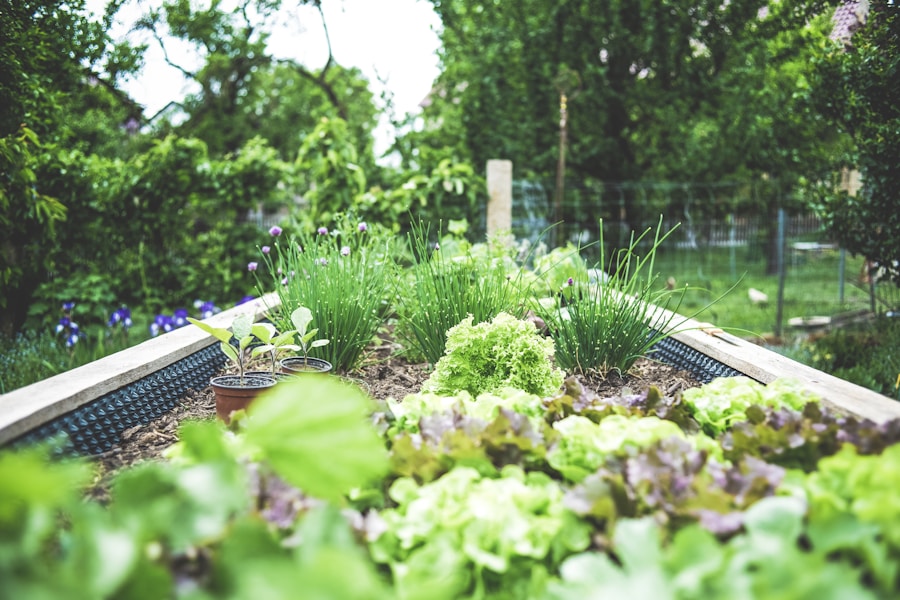
Integration is also more effective than separation. Rather than planting a separate “pollinator bed” at the edge of your garden, scatter flowers throughout your vegetable beds. A clump of borage next to your zucchini. Marigolds between your tomato cages. Sweet alyssum as a ground cover under your pepper plants. Sunflowers at the end of each row. When flowers are physically close to the vegetables that need pollinating, pollinators naturally move between them, pollinating your crops as a byproduct of visiting the flowers they came for.
Designing a Pollinator-Friendly Vegetable Garden Layout
You don’t need to sacrifice vegetable growing space to support pollinators. With thoughtful design, pollinator-supporting flowers fit into the spaces, edges, and margins that already exist in your garden. Here’s how to integrate them without losing a single square foot of vegetable production:
Edge planting: Line the borders of your garden with flowering perennials — lavender, bee balm, black-eyed Susans, or coneflower. These permanent plantings create a “pollinator frame” around your vegetables that draws insects in from the surrounding landscape. Once established, perennial borders require almost no maintenance and bloom reliably year after year.
Row ends and corners: Plant sunflowers, borage, or tall marigolds at the ends of vegetable rows and in bed corners. These spots are often underutilized — too small for a full vegetable planting but perfect for a single pollinator plant. A sunflower at each corner of a raised bed adds massive pollinator value without costing any growing area.
Living mulch strategy: Use low-growing flowers like sweet alyssum and white clover as ground cover between and beneath taller vegetables. Sweet alyssum planted at the base of tomato cages blooms all season at ground level, attracting hoverflies (whose larvae eat aphids on your tomatoes) while also suppressing weeds and retaining moisture — functioning simultaneously as a pollinator plant, a beneficial insect attractor, and a living mulch.
Let herbs bolt: Instead of fighting the natural flowering of herbs like basil, cilantro, dill, and parsley, let some plants go to flower. Their blooms are exceptionally attractive to beneficial insects. Maintain a “harvest row” where you pinch flowers for leaf production, and a “pollinator row” where you let the same herbs flower freely. This costs nothing and provides outstanding pollinator support.
Succession flower planting: Just as you succession-plant vegetables (see our planting calendar), plant flowers in succession so something is always blooming. Sow phacelia or calendula seeds every 3-4 weeks from spring through midsummer. Each planting reaches bloom stage at a different time, ensuring continuous nectar availability even when individual plantings finish flowering.
Bloom Calendar: Flowers for Every Season
The most common pollinator garden mistake is concentrating all the blooms in midsummer. Pollinators need food from the earliest spring emergence through the last warm days of autumn. Early and late season food sources are actually MORE critical than midsummer ones, because fewer plants are blooming and competition for nectar is intense. A garden that provides early spring and late fall blooms will attract and retain a larger pollinator population than one with spectacular July flowers but nothing in March or October.
The winter column deserves special emphasis because it involves doing less, not more. The urge to “clean up” the garden in fall by cutting every stem to the ground and raking every leaf is destructive to pollinator habitat. Many native bees overwinter inside hollow plant stems. Butterfly chrysalises attach to standing dead plants. Bumblebee queens hibernate in leaf litter just below the soil surface. When you cut everything down and rake everything away in October, you’re evicting next year’s pollinators from their winter homes.
The pollinator-friendly approach: leave dead stems standing through winter and don’t rake leaves from garden beds. Cut back and clean up in spring (late March to early April in most zones) after daytime temperatures consistently reach 50°F — by which point overwintering insects have emerged. This delayed cleanup looks messy to tidy-garden-minded neighbors, but it’s the single most impactful habitat decision you can make for native bees and butterflies.
Creating Pollinator Habitat Beyond Flowers
Flowers provide food, but pollinators also need water, shelter, and nesting sites. A garden that provides all four elements becomes a complete pollinator habitat — not just a fueling station but a permanent home. Here’s what to provide beyond blooms:
Water Sources
Bees and butterflies need water, but they can’t drink from deep water sources — they’ll drown. Create shallow drinking stations by filling a saucer or shallow dish with pebbles and adding water to just below the top of the pebbles. The stones give insects a safe landing pad while they drink. Place water stations near flower clusters and refresh the water every few days to prevent mosquito breeding. A dripping faucet, a bird bath with stones, or even a consistently damp patch of ground near your irrigation system serves the purpose.
Nesting Sites for Native Bees
About 70% of native bee species nest in the ground. They dig small tunnels in bare, undisturbed soil — typically in sunny, well-drained spots with sparse vegetation. Leaving some patches of bare soil in or near your garden (not tilling every inch, not mulching every surface) provides these essential nesting sites. A 2×2-foot patch of undisturbed, south-facing bare soil near your garden can support dozens of ground-nesting bee species.
The remaining 30% of native bees nest in cavities — hollow plant stems, beetle holes in dead wood, or purpose-built bee houses. You can support these species by leaving dead flower stems standing (as noted above), providing a bee hotel (a block of untreated wood with drilled holes of various diameters from 3/32″ to 3/8″), or simply leaving a pile of dead branches in a sunny corner near the garden.
Windbreaks and Shelter
Pollinators — especially smaller bees and butterflies — struggle in windy conditions. A garden protected from prevailing wind by hedges, fences, buildings, or even tall crop rows (sunflowers, corn) provides calmer conditions where pollinators can fly efficiently and visit more flowers. This is another reason to plant sunflowers along garden borders: they serve as both a pollinator food source and a windbreak that improves pollinator activity on calm days within the garden interior.
The Pesticide Problem (Even Organic Ones)
This section is uncomfortable but necessary. Pesticide use — including some organic pesticides — is the single greatest threat to pollinators in home gardens. And the threat isn’t limited to the obvious villains. Many gardeners who consider themselves pollinator-friendly still inadvertently kill bees through poorly timed or poorly chosen pest control applications.
The core principle is simple: never spray anything — organic or synthetic — on open flowers, and never spray during the hours when pollinators are actively foraging. Even organic insecticides like spinosad, pyrethrin, and neem oil are toxic to bees when applied directly. The difference between “organic” and “synthetic” is meaningless to a bee covered in freshly sprayed insecticide. Dead is dead.
Spinosad, widely considered a safe organic option, is actually highly toxic to bees for several hours after application. It becomes safe once dry, but a morning application to flowering plants can kill every bee that visits those flowers that day. Pyrethrin — another organic standby — kills bees on contact. Even insecticidal soap can suffocate bees if sprayed directly on them.
The safe practices for pollinator-friendly pest management are straightforward. First, spray in the evening after pollinators have stopped foraging for the day (most bees are inactive after sunset). By morning, most sprays have dried and are significantly less toxic to visiting insects. Second, never spray open flowers — target the foliage and stems where pests actually live, and avoid blooming portions of the plant. Third, use the most targeted approach possible: hand-picking caterpillars is safer than spraying an entire plant. A blast of water knocks off aphids without any chemical at all. Row covers physically exclude pests without affecting pollinators.
Fourth — and this is the hardest adjustment for many gardeners — accept some pest damage. A garden with zero pest damage is a garden with zero insects, including zero pollinators. A healthy ecosystem includes some herbivory. The caterpillars eating your dill are likely swallowtail butterfly larvae that will become important pollinators as adults. The “pest” and the “pollinator” are often the same insect at different life stages. A truly pollinator-friendly garden accepts 10-15% cosmetic damage from insects as the price of a functional ecosystem.
Troubleshooting Poor Pollination
If your squash flowers are dropping without producing fruit, your tomatoes have misshapen fruit, or your cucumber yields are disappointing despite healthy-looking plants, pollination is likely the issue. Here’s a systematic troubleshooting guide that addresses each symptom and its solution:
| Symptom | Likely Cause | Solution |
|---|---|---|
| Squash flowers drop without fruit | No pollinator visits; or only male flowers open (males appear first) | Hand-pollinate with a paintbrush (transfer pollen from male to female flowers). Plant more pollinator flowers nearby. Be patient — female flowers appear 1-2 weeks after males. |
| Misshapen cucumbers / zucchini | Incomplete pollination (some seeds fertilized, others not) | More pollinators needed. Plant borage, sunflowers nearby. Ensure morning access — don’t cover with row covers during bloom without removing them by sunrise. |
| Tomato flowers drop without fruit | Too hot (>90°F), too cold (<55°F), or poor pollination | Temperature is likely primary cause; however, encouraging bumblebees (buzz pollinators) helps even in suboptimal temps. Gently shake tomato trusses to supplement. |
| Strawberries are small and misshapen | Insufficient pollination of all flower parts | Each strawberry requires pollination of 200+ individual ovules. More bee visits = larger, more uniform fruit. Plant sweet alyssum as ground cover near strawberries. |
| Pepper flowers drop | Temperature stress + inadequate pollination | Peppers self-pollinate but benefit hugely from buzz-pollination. Support bumblebees. Gently tap flowering stems to simulate bee vibration. |
| Few pollinators visible in garden | Lack of continuous floral resources; nearby pesticide use; no habitat | Plant diverse flowers blooming across all seasons. Add water sources and bee houses. Talk to neighbors about reducing pesticide use. Give it 1-2 seasons for populations to build. |
Hand pollination is a valid temporary solution while you build your garden’s pollinator population. For squash and cucumbers, it’s simple: identify a male flower (thin stem, no swelling at the base) and a female flower (thick stem with a small fruit visible at the base below the petals). Pick the male flower, peel back the petals, and gently rub the pollen-covered anther inside the female flower, touching the central stigma. Do this early in the morning when flowers are freshly opened. It takes 30 seconds per flower and guarantees pollination even with zero pollinators present.
For tomatoes and peppers, you can simulate buzz pollination by holding an electric toothbrush against the flower stem for 2-3 seconds. The vibration shakes pollen loose just as a bumblebee’s wings would. This is a surprisingly effective technique used commercially in greenhouses where natural pollinators can’t access the plants.
But hand pollination is a workaround, not a solution. The real solution is creating conditions where natural pollinators do the work for you — every flower, every morning, automatically, for free. That’s what the strategies in this guide create: a garden that pollinates itself because the ecosystem is functioning as designed.
The Complete Explore Your Garden Library
🥬 Complete Vegetable Garden Guide — your foundation for everything
📅 Planting Calendar — timing for flowers AND vegetables
🍅 How to Grow Tomatoes — the crop that benefits from buzz pollination
🌻 Companion Planting — flowers that protect AND pollinate
🛡️ Pest Control — pollinator-safe pest management
🌿 Herb Garden — let herbs flower for pollinators
📦 Raised Beds — integrate flowers into bed design
↗️ Vertical Gardening — climbing nasturtiums on trellises
🪴 Container Gardening — pollinator pots on patios
🪱 Composting Guide — healthy soil grows healthy flowers
🌍 Soil Improvement — the foundation for all plant growth
💧 Drip Irrigation — water flowers and vegetables efficiently
🌱 Starting Seeds Indoors — start flowers early for early blooms
🧊 Season Extension — early flowers feed early pollinators
🍂 Mulching Guide — living mulch flowers like sweet alyssum
Frequently Asked Questions
How many flowers do I need to plant to attract pollinators?
You don’t need a field of flowers — even 10-15 plants of 3-5 different species, scattered throughout your vegetable beds, makes a significant difference. The key is diversity (different species) and continuity (something blooming at all times from spring through fall) rather than sheer quantity. Start with borage, sweet alyssum, and sunflowers — these three species alone cover a wide pollinator range and bloom for most of the growing season. Add a few more each year as you see which pollinators visit your area.
Will planting flowers attract more pests to my vegetable garden?
Some flowers do attract aphids and other pests — but this is actually beneficial. Nasturtiums, for example, attract aphids AWAY from your vegetables (functioning as a trap crop). More importantly, the flowers attract predatory insects (hoverflies, parasitic wasps, ladybugs) that EAT pests. Gardens with diverse flower plantings consistently have FEWER pest problems than monoculture vegetable gardens, because the predator-prey balance tips in your favor. The flowers create the ecosystem that controls pests naturally.
I’m scared of bees. Can I attract pollinators without getting stung?
The vast majority of garden-visiting bees are non-aggressive. Solitary bees (mason bees, leafcutter bees) are extremely docile — most don’t even have effective stingers. Honeybees sting only in defense of their hive, which isn’t in your garden. Bumblebees will sting if directly handled but otherwise ignore humans completely. Hoverflies look like bees but have no stinger at all. In over a decade of intentional pollinator gardening, I’ve been stung once — and that was because I accidentally knelt on a bumblebee while weeding. The risk is genuinely minimal, and the reward to your garden is enormous.
Can I support pollinators in a container garden?
Absolutely. Even a few pots of lavender, basil (let it flower), and borage on a balcony or patio provide meaningful pollinator support. Window boxes of sweet alyssum and calendula attract hoverflies and small bees to upper-floor apartments. A single large pot of sunflowers on a sunny deck becomes a bee fueling station. You don’t need ground space to contribute to pollinator health — any sunny surface that holds a container of flowering plants helps.
Why aren’t pollinators visiting my garden even though I have flowers?
Several possibilities: your flowers may be highly bred ornamental varieties with reduced nectar (switch to single-petal, open-faced varieties or native species). You may be spraying at the wrong time (review the pesticide section above). Your neighbor may be using pesticides that affect your garden’s pollinator population. The flowers may all bloom at the same time, leaving gaps in the season. Or it may simply take time — pollinator populations build over 1-3 seasons as word gets out (in pollinator terms) that your garden is a reliable food source. Consistency year after year is key. Keep planting flowers, and they will come.
Should I buy a honeybee hive to pollinate my garden?
Probably not, unless you’re genuinely interested in beekeeping as a separate hobby. A single honeybee hive is far more pollinators than a home garden needs, requires significant ongoing management, and doesn’t support native bee diversity. You’ll get better pollination results — with zero management — by planting flowers that attract native bees, bumblebees, and other wild pollinators. These species are already in your area; they just need food, water, and shelter to thrive. Focus on habitat, not hive management.